 Settled OverseasSomeday Doesn’t Have to Become Never.

Move to Costa Rica prepared — pura vida, priced honestly.
Costa Rica offers the clearest retiree residency law in this lineup and a real public health system you join, not just admire. It is also not the bargain some older guides still promise. This page states the current law, the current U.S. advisory, and October 2026 costs — dated and sourced, before any lifestyle talk.
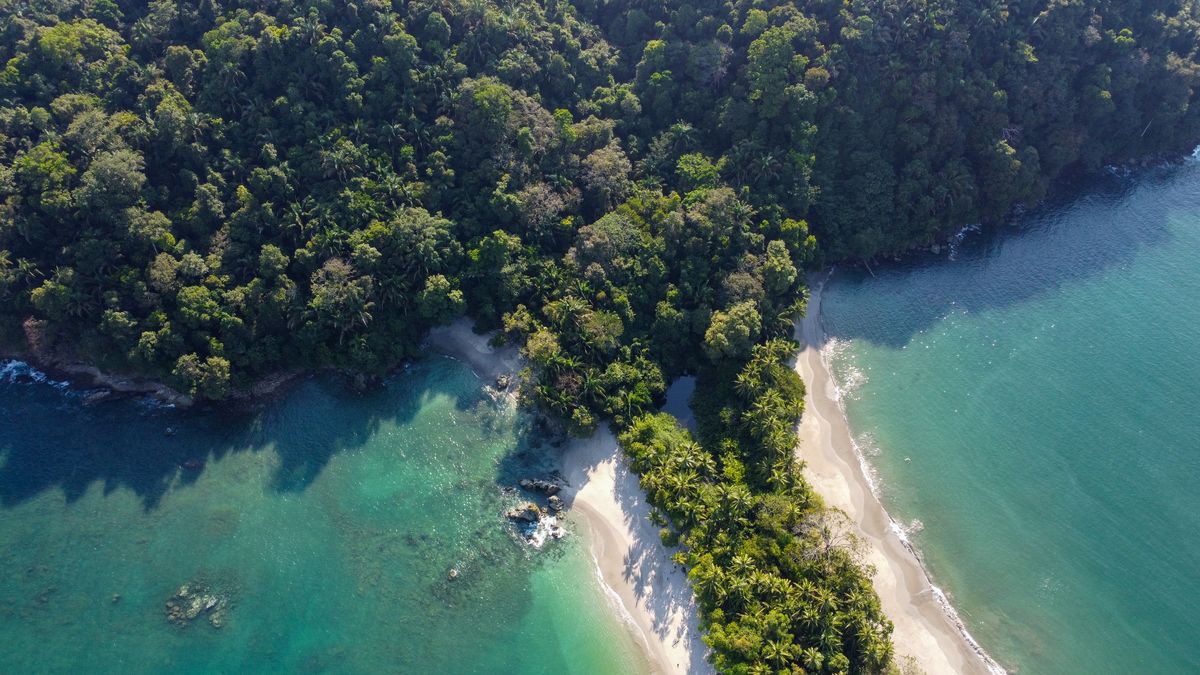
Costa Rica, honestly.
Costa Rica is the country in this lineup where the retiree route is written most clearly in law: a US$1,000-a-month lifetime pension qualifies, your spouse rides on the same amount, and after three years you can convert to permanent residence. The public health system (la Caja) covers pre-existing conditions once you are enrolled — the trade-off is waiting time, not exclusions. Those are real advantages, and people build good retirements here on them.
1. The old “live on $1,200 a month” story is out of date. October 2026 asking rents put a conservative couple at roughly US$2,100–$4,600 a month depending on the town (Section: Six places). The Central Valley small towns are the value end; Escazú/Santa Ana and Tamarindo are not bargains.
2. CAJA is mandatory — and its exact price is set at your enrollment interview. Affiliation with the CCSS is a condition of residency and renewal. The contribution is a percentage of a reference income CCSS sets from your proven pension or rent; the current official percentage table was not published in a source we could capture, so we print no invented rate. Your dossier tells you the exact figure to get in writing before you budget.
3. The U.S. advisory is Level 2. The U.S. State Department’s Costa Rica advisory (list dated 2 April 2026) is Level 2: Exercise Increased Caution, for crime — petty crime countrywide, with violent crime also affecting tourists. It is nationwide; there are no separate higher-level regions to hide behind or fear.
4. Healthcare is excellent — in the Central Valley. The three big private hospitals cluster around San José/Escazú/Santa Ana. Every place below is measured against its distance from that care, not just its beach or its rent.
None of that settles the decision for you. It does mean Costa Rica rewards a planner who files the residency category correctly, gets the CAJA figure in writing, picks a town with its healthcare drive attached, and rents before buying. That is exactly what the rest of this page — and the dossier — is built to do.
A short history
Indigenous peoples including the Chorotega, Bribri, Cabécar, and Huetar lived in the territory long before Spanish contact; Columbus reached the Caribbean coast in 1502. As the least mineral-rich province of the Captaincy General of Guatemala, colonial Costa Rica developed slowly around small farms rather than large mines or plantations, and joined the Central American declaration of independence from Spain on 15 September 1821, proclaiming itself a sovereign republic in 1838 after a brief Mexican-imperial and federal period. Coffee — later joined by bananas — became the export backbone, financing railways, roads, and schools. Elections in 1899 are commonly described as the country’s first truly free vote, opening a long democratic run interrupted only by the Tinoco dictatorship (1917–1919) and the events of 1948.
A disputed presidential election triggered a 44-day civil war in 1948. The victorious junta led by José Figueres Ferrer governed for 18 months, oversaw the new constitution adopted in 1949, extended the vote to women and Afro-Costa Ricans, nationalised the banks, and — on 1 December 1948 — declared the army abolished; Article 12 of the 1949 constitution then proscribed a permanent army, leaving public order to civilian police. Figueres handed power to the elected president in 1949. Since then Costa Rica has held continuous elections, invested disproportionately in education and public health (the Caja, founded 1941, became the universal-care backbone), and from the 1970s built one of the world’s densest protected-area systems alongside a tourism-and-services economy — the institutional settlement a new resident plugs into today.
The political system, in brief
Knowing who runs the country — and how rules change — is part of moving there prepared.
The president is head of state and head of government, elected directly. A unicameral Legislative Assembly of 57 deputies passes the laws, including the migration rules a resident files under.
In office since 8 May 2026 for the 2026–2030 term (Presidency of the Republic). She is the country’s second woman president.
President and deputies are elected together in February, with inauguration on 8 May. A candidate needs over 40% to avoid a runoff, and consecutive presidential re-election is barred — so the administration that set your filing rules can change them only through the Assembly and regulators.
The colón floats under Central Bank management rather than a fixed peg, and has traded below ₡500/US$1 in 2026 reporting. Confirm the rate on the day you sign anything; do not budget from a rate copied out of an older guide.
Residency: two clear routes, in the statute
Costa Rica’s routes sit in Ley 8764, the General Migration Law. Figures below are from the official Asamblea Legislativa text, checked 8 October 2026.
- Pensionado — US$1,000/monthProve a permanent, stable pension from abroad of at least US$1,000/month (Art. 81); consular practice describes it as a lifetime pension. Proof is a pension-authority certificate, apostilled and officially translated if not in Spanish.
- Rentista — US$2,500/monthProve permanent, stable monthly income of at least US$2,500/month from abroad or from banks in the National Banking System (Art. 82), with evidence it continues for at least two years.
- Spouse and children ride on the same amountWith the single qualifying amount you may also request residence for a spouse and for children under 25, or older children with a disability (Art. 82). No additional per-dependent dollar amount appears in the statute.
- Term, renewal, and permanent residenceTemporary residence runs up to two years, renewable for an equal period if you still meet the conditions and are affiliated with the CCSS (Arts. 79, 86). After three consecutive years of temporary residence you may opt for permanent residence (Art. 78).
- Presence ruleThere is no minimum day-count. Instead, a temporary resident absent for more than two consecutive years faces cancellation, with proven exceptions and a suspension option. Keep the DIMEX renewed — letting it lapse past three months is also a cancellation ground.
- WorkPensionado/Rentista status is not a local work permit: you may perform only paid activities the migration authority (DGME) authorises, and unauthorised paid work is a cancellation ground (Art. 80). Whether foreign-employer remote work is treated as authorised for these categories was not carved out in the statute text — confirm before relying on it.
The US$60,000 deposit question — printed as an open question. Older practice proved Rentista income with a US$60,000 Costa Rican bank deposit drawn down at US$2,500/month. Legal reporting in 2025 says DGME practice has moved toward requiring proof that the income itself is monthly, permanent, and stable, and no current official DGME text confirming or abolishing the deposit mechanism was captured for this page. Treat “deposit $60,000 and qualify” as a filing question to confirm in writing — not a route to plan around.
Two deposits, not one. Separately from income proof, every temporary resident posts a DGME guarantee capped at the value of a high-season ticket home, refundable under the Regulation (Arts. 133–137). The exact current amount for a U.S. applicant was not captured from an official source — ask for it in writing at filing.
The gap we won’t hide: the live DGME Pensionado/Rentista checklist (documents, fees, current income-proof rule) could not be fetched directly from migracion.go.cr for this page. The document pattern in your dossier — apostilled birth/marriage and criminal-record certificates, certified passport copies, fingerprint registration, consular registration — is labelled as the checklist to re-verify against DGME before you file, not as a substitute for it.
Healthcare, without the brochure version
Medicare does not pay for routine or planned care in Costa Rica. The U.S. Centers for Medicare & Medicaid Services list only three narrow foreign-hospital exceptions; none describes retiring in Costa Rica. Medigap’s foreign-travel emergency benefit (80% after a US$250 deductible, US$50,000 lifetime maximum, emergencies starting in the first 60 days of a trip) is a travel bridge, not resident coverage. Keeping Medicare can still matter for U.S. visits and a future return — it is not Costa Rican coverage.
La Caja (CCSS) is your mandatory base — comprehensive, with queues. Legal residents affiliate with the Caja Costarricense de Seguro Social: EBAIS clinics, health areas, and public hospitals covering visits, hospital stays, surgeries, listed medications, and pre-existing conditions once enrolled. The documented trade-off is time: long waits for non-urgent specialist appointments and elective surgery are the system’s known weakness, while emergencies are handled. (Press-reported CCSS waiting-list averages circulate widely; no dated official CCSS dashboard was captured for this page, so we print no wait-time number as current.) As a foreign pensionado or rentista you enter as a voluntary insured person contributing to both the health insurance (SEM) and the pension insurance (IVM), as a percentage of a reference income the CCSS sets from your proven pension or rent at enrollment. The exact current percentage is a printed gap — secondary sources conflict (roughly 7–11% and wider), which is itself the evidence that the figure is assessed per case. Get yours in writing at enrollment.
Private care concentrates in the Central Valley. Clínica Bíblica (downtown San José, plus a Santa Ana campus) and Hospital CIMA (Escazú) publish 24/7 emergency, hospitalisation, ICU, surgery, imaging, and dozens of specialties; Hospital Metropolitano’s network adds sites in San José, Lindora (Santa Ana), Heredia/Cartago-area centres, and — importantly for the places below — Liberia and Huacas in Guanacaste, Quepos, and Ciudad Quesada (San Carlos). Outside the metro, plan on CCSS hospitals plus travel time for complex private care.
Private insurance: real options, no invented senior rate card. The state insurer INS sells health cover nationwide; its digital Plenisalud tiers are advertised “from” ₡355/day (ambulatory), ₡521/day (hospital), and ₡1,371/day (integral) — starting rates, not senior quotes. Private insurer BMI (Escazú) and international brokers such as Pacific Prime quote by individual underwriting. The gap we won’t hide: no official, dated premium table at ages 65, 70, and 75 was obtainable for INS, BMI, or the international carriers, and secondary sources even disagree on INS’s maximum entry age (70 vs 75). Your dossier gives you the exact written-quote script instead of a number we could not verify: your exact ages, deductible, U.S. coverage in or out, pre-existing-condition wording, hospital network, and renewal-at-older-ages language — confirmed before you rely on it.
Six places, honestly compared
Rents are October 2026 asking rents from live listings — not medians and not promises; Spanish-language local search routinely finds lower unfurnished homes. Couple totals are conservative planning ranges (rent plus 2026 guide category costs, CAJA plus modest private pay for a healthy couple in their 60s; vehicle purchase, flights, legal fees, and setup excluded). Every place is measured against its distance from Central Valley private care.
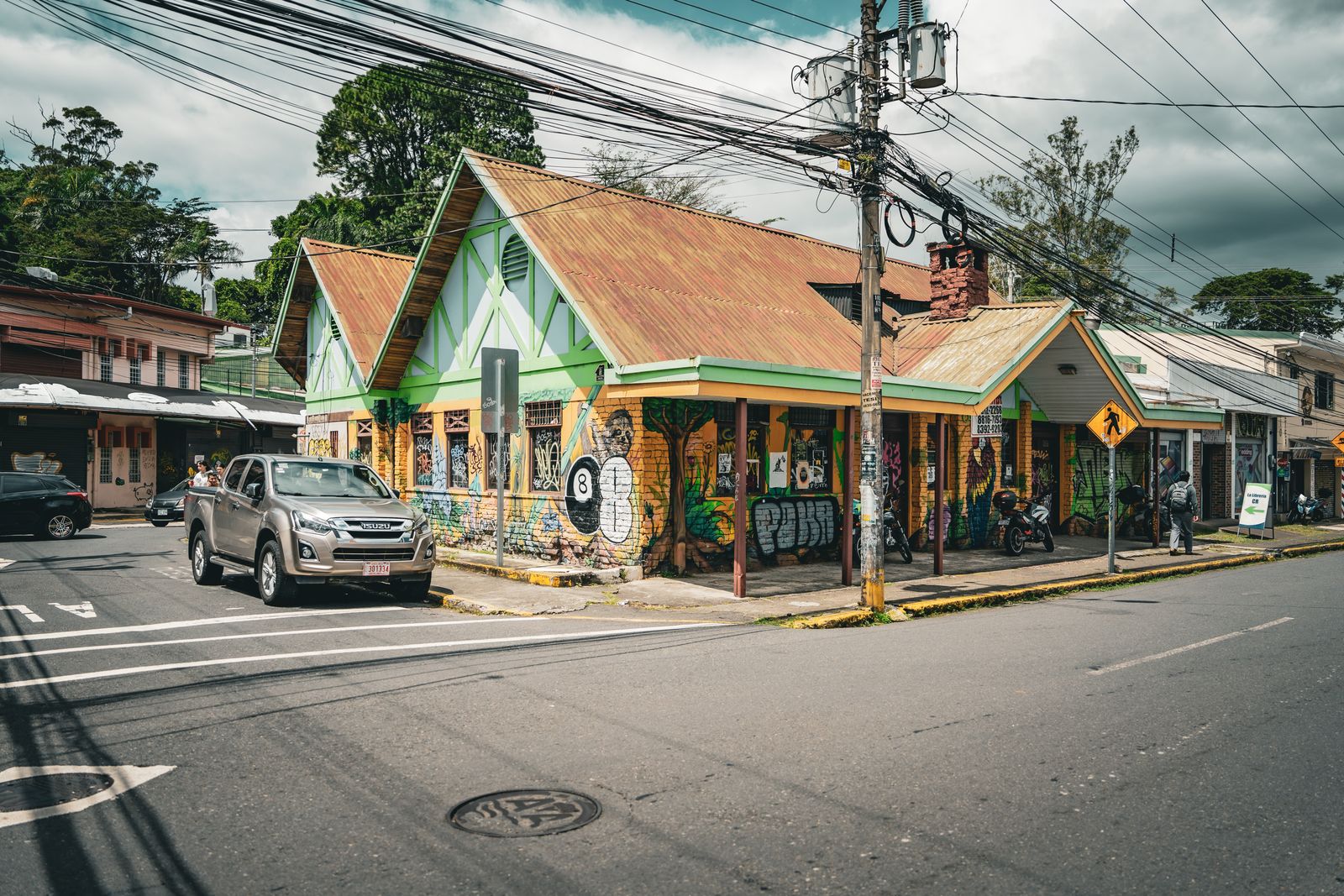 San José · Escazú · Santa Ana
The full-service metro: CIMA and Clínica Bíblica, 20–30 minutes from SJO airport, the deepest English-facing services. 2BR asking rents US$1,400–$2,200/mo; conservative couple total US$3,200–$4,500/mo.
Details ↓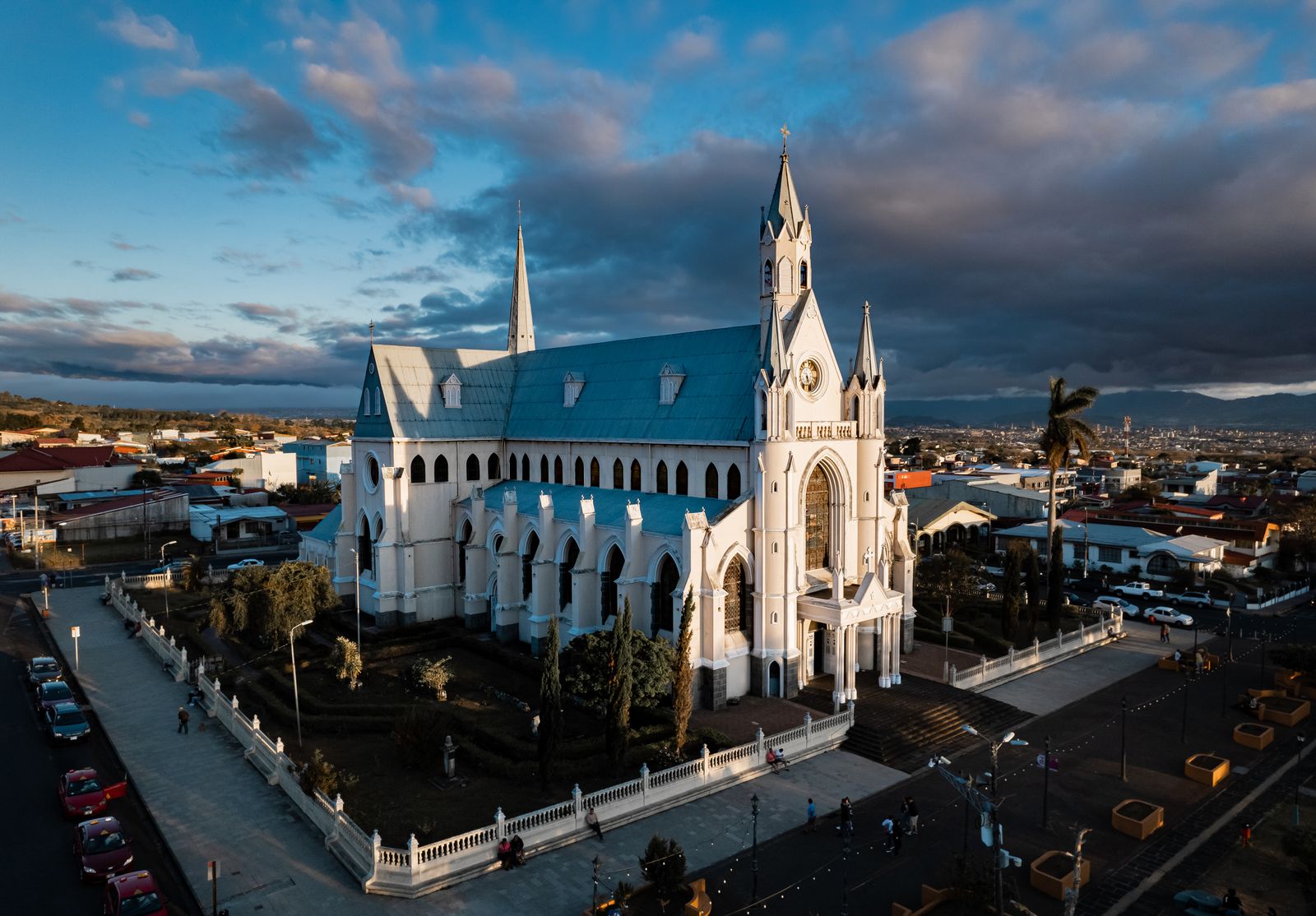 Heredia · Alajuela
Real Central Valley cities with their own hospitals, minutes from the airport in Alajuela’s case, at mid prices. 2BR asking rents US$800–$1,300/mo; couple total US$2,500–$3,200/mo.
Details ↓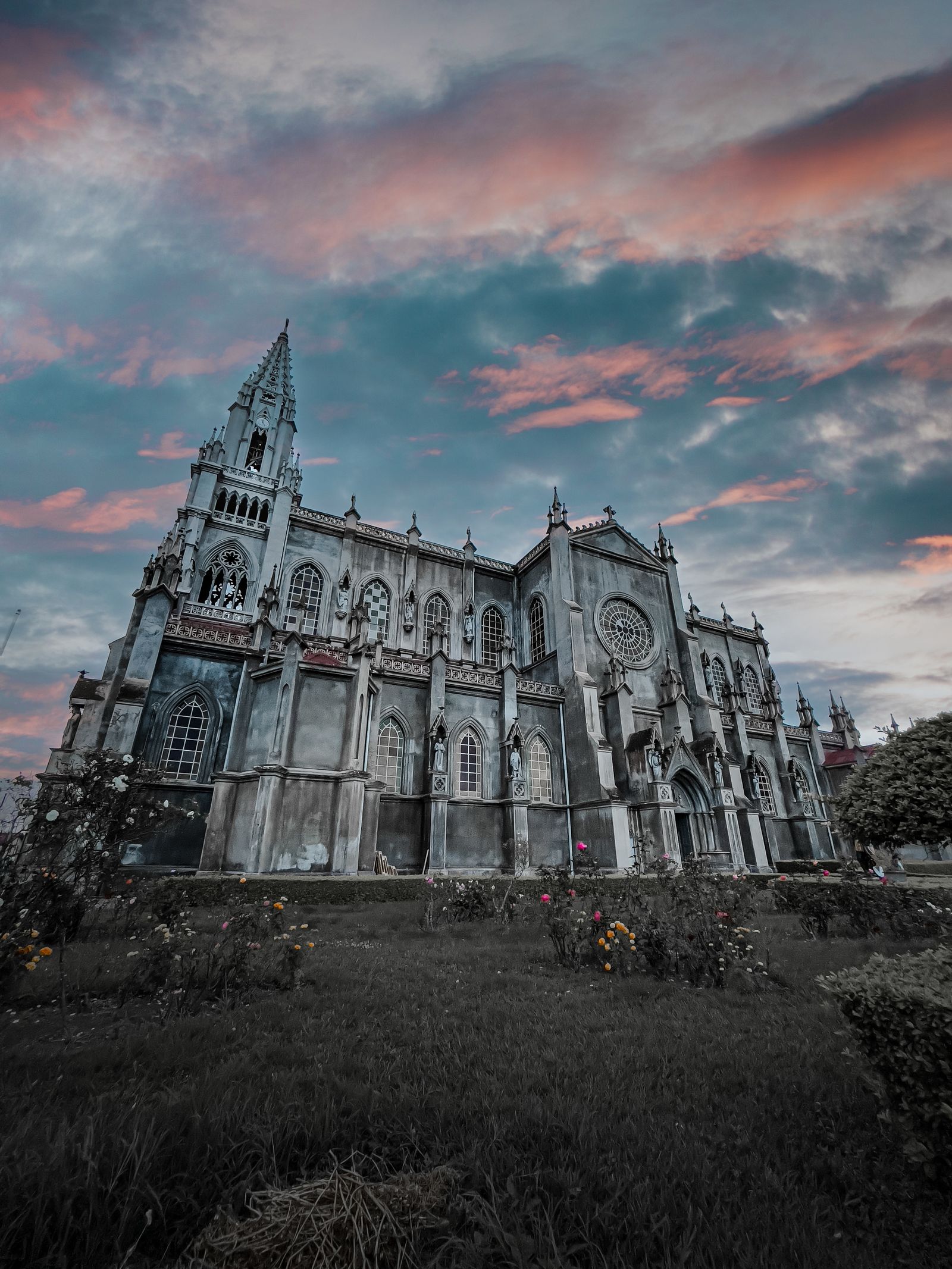 Grecia · Atenas
Small-town Central Valley value with a mild climate and an established retiree presence in Atenas. 2BR asking rents US$800–$1,000/mo; couple total US$2,300–$2,900/mo. Photo: a Central Valley church at San Isidro de Coronado.
Details ↓ Liberia · Tamarindo · Playas del Coco
Dry Pacific living with its own international airport (LIR). 2BR asking rents: Liberia US$700–$1,000, Coco US$1,000–$1,500, Tamarindo US$1,200–$1,800/mo; couple totals US$2,400–$4,600/mo by town.
Details ↓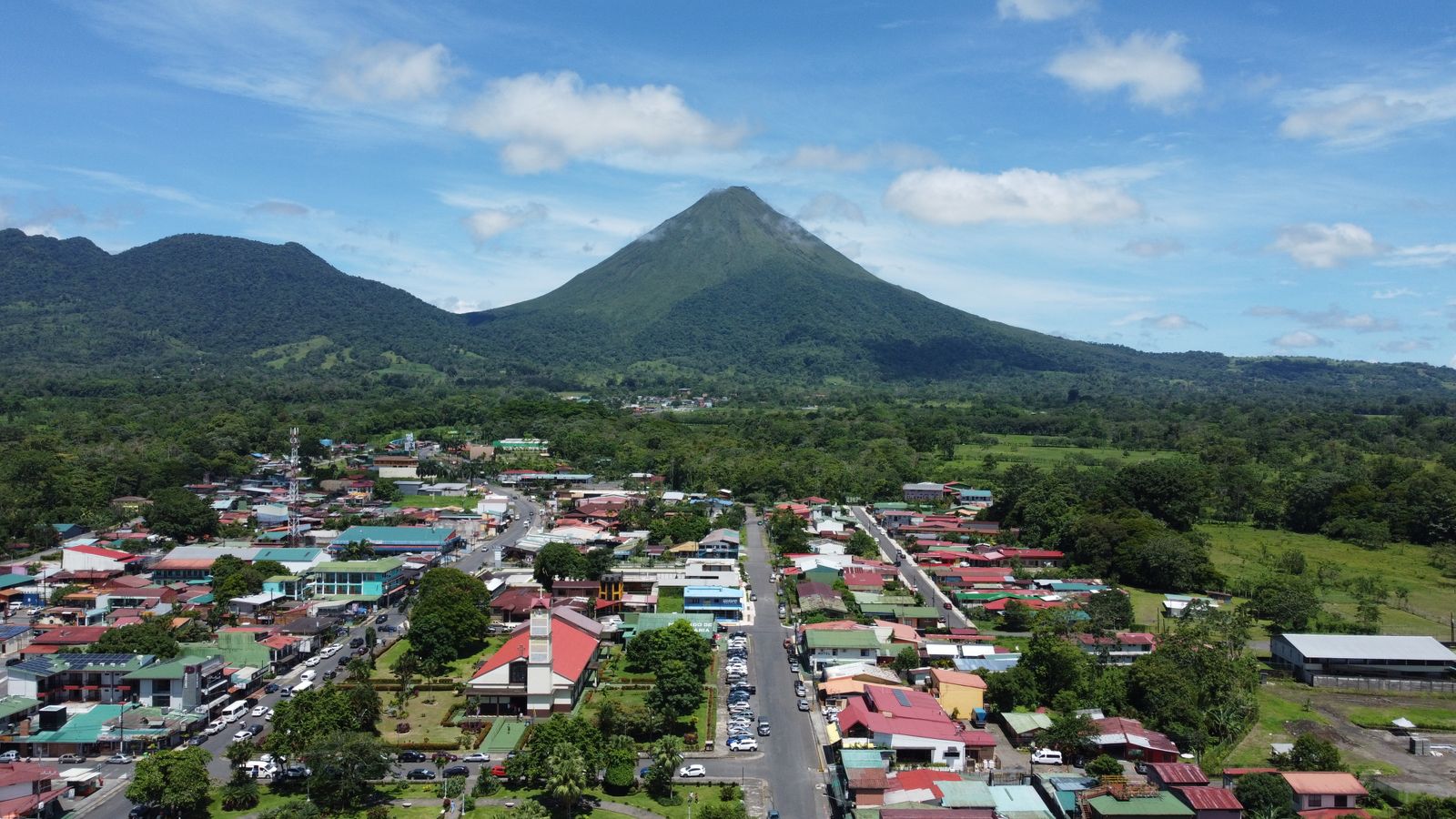 La Fortuna (Arenal)
Volcano, hot springs, and rain — with the healthcare-drive warning printed on the card. 2BR asking rents US$900–$1,500/mo; couple total US$2,600–$3,400/mo plus an evacuation reserve.
Details ↓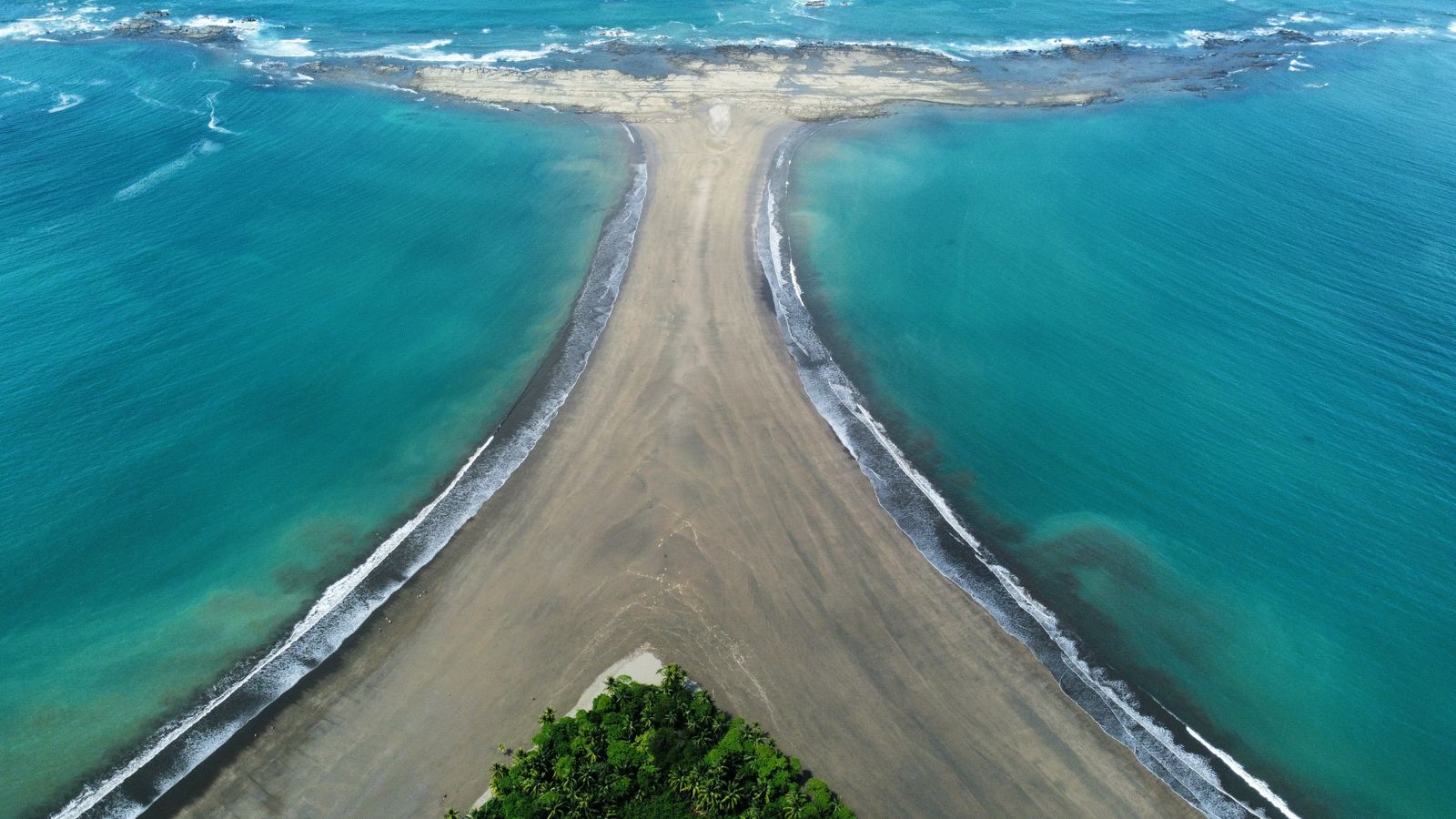 Pérez Zeledón · Uvita–Dominical
The Southern Zone: a lived-in valley city (San Isidro) paired with the Marino Ballena coast. 2BR asking rents San Isidro US$600–$900 (thin sample), Uvita/Dominical US$1,000–$1,600/mo; couple totals US$2,100–$3,700/mo.
Details ↓San José / Escazú / Santa Ana — the full-service metro
Why people pick it: the strongest healthcare in the country (CIMA in Escazú, Clínica Bíblica in San José and Santa Ana), the shortest trip to Juan Santamaría (SJO) airport, international schools, U.S.-style supermarkets, and English-speaking medicine. Central Valley temperatures run roughly 65–80°F, so air-conditioning is rarely the budget problem. The trade-off: the country’s highest rents (Escazú 2BR samples at US$1,400–$2,000; Santa Ana 1–2BR at US$1,200–$1,700, October 2026 asking) and San José–Escazú–Santa Ana traffic as a daily cost. Conservative couple total US$3,200–$4,500/month. You are paying a premium for care proximity — if you have an ongoing condition, that premium may be the point.
Heredia / Alajuela — mid-price Central Valley cities
Why people pick it: real Costa Rican cities with universities, free-trade-zone jobs, their own large public hospitals (San Vicente de Paúl in Heredia, San Rafael in Alajuela), and private clinics — without Escazú prices. Alajuela is the airport city (5–15 minutes to SJO terminals); Heredia runs 25–40 minutes depending on traffic. Asking samples: Heredia 2BR at US$1,300 and ₡430,000–₡535,000/month (October 2026). Planning band US$800–$1,300/month; conservative couple total US$2,500–$3,200/month. The trade-off: fewer English-facing services than Escazú; Spanish carries daily life here.
Grecia / Atenas — small-town Central Valley value
Why people pick it: two established small towns about 20 minutes apart, Atenas with a long-standing North American retiree community, at the gentlest rent band in the Central Valley — Atenas 2BR samples at US$800–$850 and Grecia at US$800–$950 (October 2026 asking; a US$1,800 gated outlier excluded). Planning band US$800–$1,000/month; conservative couple total US$2,300–$2,900/month. Elevation around 700–900 m gives guide-reported temperatures roughly 63–82°F with little need for heating or air-conditioning; Atenas is about 30 minutes and Grecia about 40 minutes from SJO in favourable traffic. The trade-off, plainly: no major private hospital in either town — CCSS clinics locally, Hospital San Rafael (Alajuela) about 30 minutes from Atenas, CIMA about 45–60 minutes. Serious ongoing conditions belong closer to Escazú/Santa Ana. The claim that a famous magazine named Atenas the world’s best climate circulates everywhere; no primary citation was located, so we print it as local tradition, not fact.
Liberia / Tamarindo / Playas del Coco — dry Pacific + LIR airport
Why people pick it: Guanacaste’s dry forest climate (hot, sunny, air-conditioning expected), three distinct towns, and Daniel Oduber (LIR) international airport roughly 25–30 minutes from Playas del Coco and 55–70 minutes from Tamarindo. Healthcare split: Liberia city is the regional hub (CCSS regional hospital plus private clinics, including a Metropolitano site); Tamarindo and Coco have local clinics, with hospital care in Liberia — about 45–60 minutes from Tamarindo — and full private tertiary care in San José. A “Hospital CIMA Guanacaste” pin appears on maps; its operating status as a full hospital was not verified for this page, so we do not list it. Costs (October 2026 asking): Liberia 2BR about US$700–$1,000, Coco US$1,000–$1,500, Tamarindo US$1,200–$1,800/month; conservative couple totals Liberia US$2,400–$3,100, Coco US$3,000–$3,900, Tamarindo US$3,400–$4,600/month. Liberia city is the working-city, lowest-cost option; Tamarindo is the expat hub at tourist prices.
La Fortuna — the volcano town, with its constraint printed
Why people pick it: Arenal volcano, hot springs, and a lush inland climate unlike anywhere else on this page — warm and very wet (maxima 28–32°C; annual rainfall above 3,400 mm in climatology summaries), with a tourism economy and a smaller long-stay expat layer. Asking samples for a 2BR run US$900–$1,500/month expat-facing (a ₡200,000 local listing shows a cheaper Spanish-language market exists, but is not a retiree planning figure). Conservative couple total US$2,600–$3,400/month. The constraint, in plain words: La Fortuna has a medical clinic, but serious injuries may require medical evacuation; the regional CCSS hospital (San Carlos, Ciudad Quesada) is over an hour by road, there is no private hospital in town, and SJO is roughly 2.5–3.5 hours by road. Budget a private-transfer/evacuation reserve — the guides do not price it, and neither do we invent it. Choose La Fortuna for the volcano, eyes open about the drive.
Pérez Zeledón / Uvita–Dominical — the Southern Zone pair
Why people pick it: San Isidro de El General is a lived-in agricultural and service city (large weekly market, bilingual schools, a large CCSS hospital — Dr. Fernando Escalante Pradilla — and private clinics, but no private hospital), while Uvita/Dominical offer the Marino Ballena coast and an established small expat enclave. Uvita/Dominical clinics refer hospital care to San Isidro (about 1–1.5 hours) or Quepos. SJO is about 3 hours from San Isidro and 3.5–4 hours from Uvita/Dominical; current domestic flight schedules were not verified. Costs (October 2026 asking): Uvita 1BR US$600–$1,000 and 2–3BR homes US$1,000–$2,000/month; San Isidro’s priced English-portal sample is thin, so its US$600–$900 band is our lowest-confidence rent figure on this page. Conservative couple totals: San Isidro US$2,100–$2,800, Uvita/Dominical US$2,800–$3,700/month. Uvita without San Isidro hides the hospital cost; San Isidro without Uvita hides why foreigners come — one plate, two lifestyles, one honest drive between them.
Dedicated city pages come next for Costa Rica — the country page carries the comparison first, and each place above gets its own page when its rent and services data supports one. We do not publish a city page built on gaps.
The U.S. side does not stop at the border
Social Security. SSA pays benefits to Costa Rica by direct deposit using Form SSA-1199-OP51. The account must be in Costa Rican colones; your bank completes the SWIFT/BIC and IBAN section, and the signed form goes to the Federal Benefits Unit at the U.S. Embassy in San José. The dollar benefit converts to colones at the daily international rate before deposit. Do not close the old account until payments start in the new one, and keep SSA informed of address and banking changes.
Taxes — territorial, with one watch item. Costa Rica taxes Costa Rican-source income; foreign-source income of residents is generally outside its income tax, and Law 9996 (Art. 5(c)) expressly exempts the amounts declared as income to qualify for pensionado/rentista status — while Costa Rican-source earnings and local investment income are taxable. There is no comprehensive U.S.–Costa Rica income tax treaty, and the United States taxes its citizens on worldwide income wherever they live; the FBAR rule reports foreign bank accounts over US$10,000 combined at any moment in the year, and FATCA Form 8938 may also apply. Watch item, not law: a Finance Ministry bill filed in September 2026 (Bill 25.796) would tax residents’ foreign-source interest, dividends, royalties, rents, and capital gains at 15% — pensions and employment income are not among its categories as drafted, and it has not been enacted. A 2023 reform already taxes certain foreign passive income of non-qualified multinational entities; that is an entity rule, not a retiree pension tax. Confirm your own position with a cross-border preparer before filing.
Banking. State banks (Banco Nacional, Banco de Costa Rica, Banco Popular) have the broadest networks; Banco Nacional’s simplified account opens with an ID document and cell number under Central Bank rules, with tiered transaction limits, and a conventional account raises limits. Guide-reported documents for fuller accounts: passport and entry stamp, proof of address, income/source-of-funds proof (pension or SSA letter, tax return, bank statements), and an account-purpose declaration. A DIMEX materially improves access, and branch-level checks vary — confirm at the chosen branch. (Official foreigner checklists for BCR and BAC Credomatic were not captured for this page; we publish the Banco Nacional simplified-account description as bank-sourced and the rest as guide-reported.)
Driving. Residents convert a valid foreign license to a Costa Rican one by homologación through the transport ministry’s driver-education authority — in person, by appointment, at one of 13 sites, without the basic course or practical exam. Requirements include an official translation, a license certification, current immigration status, a medical opinion, and no unpaid infractions; after approval, the license prints at Banco de Costa Rica (₡5,000 plus commission). The exact certification chain for a U.S. license (state driving record, apostille, or embassy letter) was not spelled out in the official summary — confirm it when you book. Tourists drive on a valid foreign license during legal tourist stay.
Vetted contacts, with the gaps printed
Researched from public sources and verified 8 October 2026. No outreach was made. Self-reported claims are marked as self-reported; where no provider met the bar, we print the gap instead of filling it with a weaker name.
- Immigration — Quatro Legal (Escazú + regional offices)quatro.legal — +506 2103-7294 · info@quatro.legal. Law firm with offices listed in Escazú, Jacó, Atenas, Huacas (Guanacaste), Manuel Antonio, and Cahuita, publishing current residency guidance. Ask which named attorney/notary handles your DGME filings and get the Colegio registration number in the engagement letter.
- Immigration — CRIE, Costa Rica Immigration Experts (San José)crie.cr — info@crie.cr. An immigration consultancy, expressly not a law firm (its own guidance says so): it prepares and manages residency files and refers matters needing a lawyer or notary. Good transparency on verifying professionals; ask in writing who your attorney/notary will be. Its published summaries are the firm’s own — verify thresholds, including any deposit route, against DGME at filing.
- Health insurers — INS and BMI; broker — Pacific PrimeINS (state insurer): grupoins.com · +506 2287-6000 — quotes INS products only, Spanish-first. BMI Seguros (Escazú, private insurer): bmicos.com · +506 4036-4620. Pacific Prime (international broker, remote): pacificprime.lat · +1 (332) 222-3909. No broker who quotes INS + BMI + international carriers side-by-side in-country was verified — and no age-65/70/75 premium table exists in this research. Get written quotes at your exact ages.
- Rentals — Coldwell Banker Pura Vida Paradise (Atenas)puravidaparadise.com — +506 6043-5090 · info@puravidaparadise.com. Current long-term Atenas inventory (e.g., a furnished 2BR at US$850/month, October 2026). Conflict, printed: a sales-led brokerage. Confirm lease length, fees, and residency-address use in writing.
- U.S. taxes — U.S. Tax International (San José) and Taxes for Expats (remote)ustaxinternational.com — contact@ustaxinternational.com · +506 4000-7288 / +1 (800) 345-7034. taxesforexpats.com — success@tfx.tax · +1 646-397-2887. Both publish Costa Rica-specific guidance; there is no U.S.–Costa Rica tax treaty, so confirm your preparer’s Costa Rica retiree files and get a by-form fee in writing.
- Moving and pets — SDC International Shipping; Pet Lounge CR; PetRelocationsdcinternationalshipping.com — 877-339-0267 (FMC-licensed U.S. origin mover; Costa Rica-route independent reviews unverified). petloungecr.com — +506 2440-0529 · info@petloungecr.com (Costa Rica pet shipper, both directions). petrelocation.com/country/costa-rica (requirements checklist; verify against USDA APHIS and SENASA before booking).
A warning that belongs at the top: Outlier Legal Services, long the default English-language recommendation for Costa Rica residency, has ceased operations in Costa Rica and transferred its files to Quatro Legal. Do not engage Outlier or pay it new fees; anyone with an open Outlier file should obtain its status and refund position in writing.
The gaps we won’t hide: no dedicated long-term rental agent met the bar in Guanacaste, the Central Pacific, Arenal, Monteverde, or the Caribbean (Atenas is the one vetted rental book); no independently reviewed immigration attorney based in La Fortuna, Monteverde, Nosara, or Puerto Viejo — expect Central Valley filing with travel to appointments; no insurer-verified premiums at 65, 70, or 75 and no side-by-side in-country health broker; no standalone sworn translator met the bar as its own listing (translations normally ride inside the residency file — record the authorised translator’s name); and no U.S.→Costa Rica mover earned an unqualified recommendation. Verified 8 October 2026.
Three red flags before you hire any local helper: (1) anyone who guarantees residency or a decision date, will not state the DGME category and checklist behind your file, or will not give the responsible attorney’s full name and bar registration number; (2) money outside traceable, papered channels — cash-only fees, deposits to a personal account, no written scope separating fees, notarial acts, third-party costs, and official payments; (3) reputation you cannot check — only testimonials on the helper’s own site, nothing dated after 2023, a “free” tour that is really a property-sales route, or a health “advisor” who will not say whether they are a single-carrier agent or an international broker. Ask: “Who pays you besides me?”
Trivia: did you know?
Small facts, checked and tightened — no brochure folklore.
Costa Rica abolished its army on 1 December 1948; the 1949 constitution (Article 12) banned a permanent military. The old Bellavista barracks in San José is now the National Museum. Police handle internal security — demilitarised, not unpoliced.
More than a quarter of Costa Rica’s land — over 25% — sits in national parks, refuges, and other protected areas, with about 30 national parks alone.
An estimated 500,000+ species — roughly 5% of the world’s known biodiversity — in a country the size of West Virginia. The percentage is an estimate, and it keeps growing as new species are described.
“Pura vida” (“pure life”) works as hello, goodbye, thank-you, and “all is well.” The phrase took off after the 1955 Mexican film ¡Pura Vida! reached Costa Rica in 1956 — Costa Ricans made it their own. It is an unofficial national motto, not a legislated one.
In 2025, 98.6% of Costa Rica’s electricity came from renewables (hydro, geothermal, wind, biomass, solar). Drought years dip lower — about 86–91% in 2024 — and petrol for transport is still mostly imported. Electricity, not total energy.
Quick quiz — no grades, we promise
1. Costa Rica abolished its army in…?
1 December 1948 — constitutionalised in Article 12 of the 1949 constitution.
2. About how much of Costa Rica’s land is protected?
Over 25% in national parks, refuges, and other protected areas.
3. The 98.6% renewable figure (2025) refers to…?
Electricity only. Transport fuel is still mostly imported oil.
Inside your dossier
What the $149 actually looks like — a document built around you, not articles for everyone.
Your Costa Rica Relocation Plan
Assembled from your planner answers: household, income, cities, timeline.
Start with the category, not the condo. If your lifetime pension is at least US$1,000 a month, you file as a pensionado (Ley 8764, Art. 81); if your stable income is at least US$2,500 a month for two years or more, you file as a rentista (Art. 82) — and in both cases your spouse and children under 25 ride on the same amount. Your chapter sequences the apostilled pension evidence, the two-year grant and renewal, the conversion to permanent residence after three consecutive years, and the CAJA enrollment that sits between approval and your DIMEX card — flagging the two figures you must obtain in writing before you file: the current DGME checklist for your category, and your reference-income percentage at CCSS enrollment.
Every figure in your dossier carries its source and its “as of” date — so you can check us before you trust us.
The gap we won’t hide: the “deposit US$60,000 and qualify” Rentista shortcut appears in older guides and even on some firms’ pages, but current DGME acceptance of it could not be verified against an official text. Your chapter prints it as a question for your filing professional to answer in writing — never as a route.
Preparation checklist
Tick things off as you accomplish them. Your progress saves on this device only — nobody else sees it.
Decide & scout
Documents
Money & health
Household, kids & pets
Everything you need to prepare your move — in one place
- The interactive planner plus your personal relocation dossier for the country you choose — built from your planner answers (digital)
- Residency steps, document lists and fee tables — each figure dated and sourced
- Children covered: schooling guidance by your children’s ages — options by age band and enrollment timing — and how kids change the residency math
- Pets covered: bringing your dog or cat — entry rules, the paperwork sequence, transport options and typical costs, by country
- Banking covered: opening a local bank account, moving pension money in, keeping your U.S. accounts healthy, and the FBAR / $10,000 reporting rule
- Costa Rica covered at country level: six places compared, with dedicated city pages as the next build step
- Vetted contacts: names, contact details, evidence, verification date
- Free updates whenever Costa Rican rules change the numbers
- 14-day promise: if it isn't what was described, email us — we'll make it right or refund you in full. Feedback welcome, never required.
Secure checkout powered by Stripe. Access opens as soon as your order confirms.
Important: Settled Overseas dossiers are educational information only. They are not legal, immigration, tax, insurance, medical, or real-estate advice, and they are not a substitute for a licensed attorney, CPA, or insurance professional in the relevant country. Residency thresholds, fees, and rules are stated as of their cited dates and change over time; confirm current requirements with official sources and qualified local professionals before acting. Medicare generally does not cover healthcare outside the United States — this dossier explains how foreign healthcare systems work and never recommends any insurance product or enrollment decision.