 Settled Overseas
Move to Mexico prepared — not guessing.
Temporary and permanent residency, the real monthly budget by city, healthcare without Medicare, and the U.S. obligations that follow you south — checked, dated, and sourced.
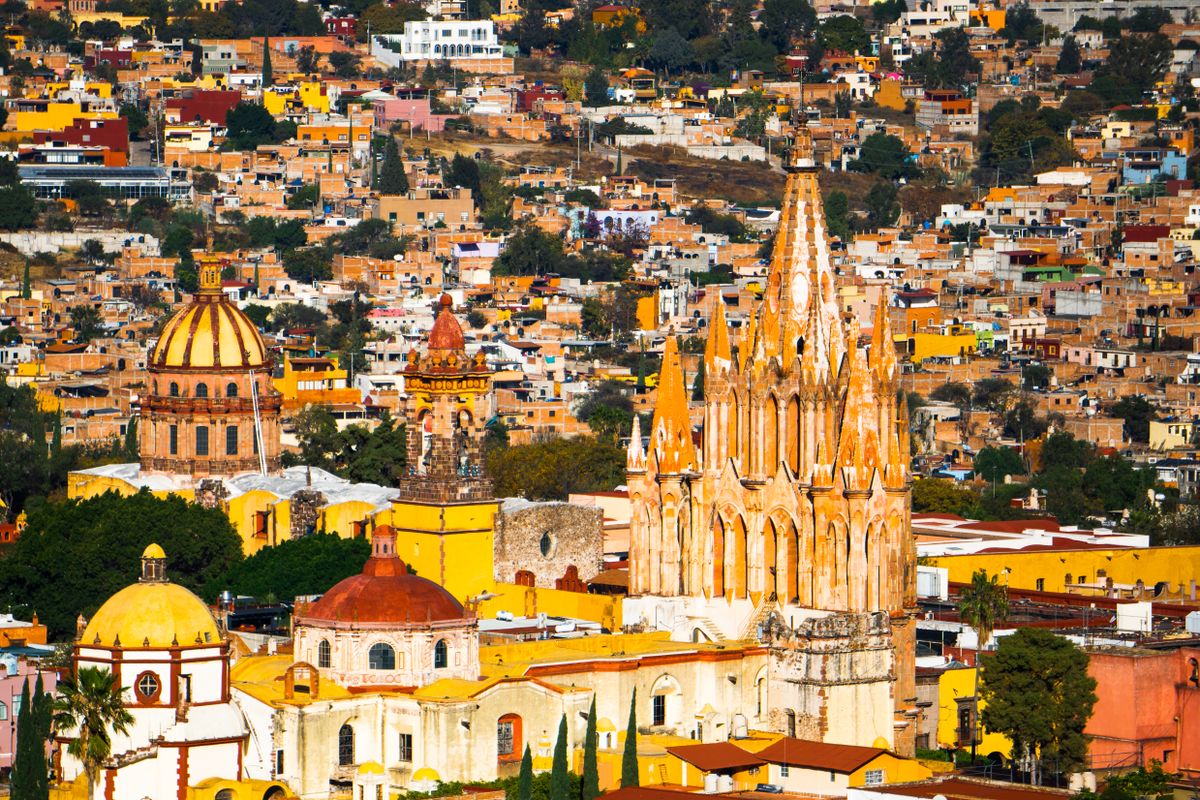
Mexico, honestly.
Mexico is legally open to American retirees — but the door is narrower than the brochures suggest. As of October 2026, temporary residency by income asks for about US$4,400–4,630 a month (or about US$74,000–78,000 in savings held for a year) — an income test that sits higher than the cost of living comfortably in the main retiree hubs. The couples who plan well are not the richest ones; they are the ones who pick the right route (income, savings, or family unity) at the right consulate, with the paperwork that consulate actually wants.
The honest parts stay on the page: Medicare does not pay for care in Mexico. Two of the most-loved hubs sit in states the U.S. advisory rates Level 3 — printed below, not smoothed over. And there is a lawful long game: hold temporary residency for four years and it converts to permanent with no second income test. Every figure on this page carries its date — INM/UMA 2026 and consulate reports as of October 2026 — so you can check us before you trust us.
A short history
Long before it was Mexico, this land held some of the Americas' great civilizations — Olmec, Maya, and the Mexica (Aztec) empire whose capital, Tenochtitlán, rose on islands in Lake Texcoco where Mexico City stands today. Spain conquered Tenochtitlán in 1521 and ruled New Spain for three centuries, building the colonial cities — and the silver economy — whose churches and plazas still anchor daily life in places like San Miguel de Allende and Oaxaca.
Independence came in 1821, followed by a turbulent century of reform, foreign intervention, and revolution (1910–20) that reshaped land, church, and state. The modern Mexico that followed industrialized fast, urbanized faster, and today is a federal republic of 32 states — the country whose migration law, public hospitals, and regional differences this dossier walks through, city by city.
The political system, in brief
Knowing who runs the country — and how rules change — is part of moving there prepared.
A president who is both head of state and head of government; Congress — the Chamber of Deputies and the Senate — makes the laws, including the migration law your residency runs under.
Took office on 1 October 2024. Mexico's presidents serve a single six-year term with no re-election — so migration rules change through Congress and each new administration, not by re-election promises.
The next presidential election is in 2030; federal congressional elections run on their own cycle. The thresholds you file under can change with a legislature.
Residency income tests are set in pesos via the UMA index, so a strong peso raises the dollar bar — the dossier shows both figures, dated.
Residency: the 2026 numbers
Since 25 July 2025 the solvency rules are written in days of UMA. UMA 2026 = MXN 117.31/day; the peso amounts below are fixed for 2026, and the dollar figures move with the exchange rate and each consulate's conversion — that is why the same rule appears as $4,400 in one guide and $4,630 in another.
- Temporary residency — by incomeMXN 79,771/month (about US$4,400–4,630), shown for 6 months; some consulates ask for 12.
- Temporary residency — by savingsMXN 1,344,373 (about US$74,000–78,000) in savings or investments, averaged over 12 months and not dipping below.
- Permanent residency, retiree — by pensionMXN 133,733/month in pension income (about US$7,400–8,000), shown for 6 months.
- Permanent residency — by savingsMXN 5,378,664 (about US$298,000–320,000), averaged over 12 months.
Consulates do not apply this identically. As reported October 2026, San Diego asks US$4,510/month for temporary residency by income and Las Vegas asks US$4,630/month — confirm the exact sheet with your own consulate before you book anything around a number. You apply at a Mexican consulate outside Mexico; once the visa sticker is in your passport and you enter Mexico, you must start the canje — the exchange for your resident card at INM — within 30 calendar days of entry. Being stamped in as a tourist instead can void the process, and residents must never enter or exit as tourists once the process has begun.
The four-year conversion is the route most retirees actually use. The first temporary card is always one year; renew to reach four years total, then convert to permanent residency — INM change-of-status guidance requires no second income test at conversion. Family unity runs on a much lower figure (220 UMA, about MXN 25,808/month in 2026). And the FMM visitor stay — up to 180 days at the officer's discretion — is a visit, not residency: it cannot be extended inside Mexico and carries no residency rights.
The gap we won't hide: we have not verified any individual consulate's own 2026 PDF sheet, and whether a couple may pool income — rather than qualifying one spouse and using family unity for the other — is unverified on a primary source. Your dossier prints both as gaps to confirm in writing with your consulate, never as facts.
Healthcare, without the brochure version
Medicare does not pay for care in Mexico. Original Medicare covers care inside its U.S. geographic area; Mexican hospitals cannot bill it. Only three narrow exceptions exist, and none of them is a plan for living in Mexico: a medical emergency in the U.S. where the closest hospital able to treat you is in a foreign country; an emergency while travelling by the most direct route between Alaska and another U.S. state through Canada; or living in the U.S. where a foreign hospital is closer to your U.S. home than the nearest U.S. hospital that can treat you. Planned care, routine care, prescriptions filled in Mexico, and air-ambulance trips home are not covered.
IMSS voluntary cover (Seguro de Salud para la Familia) is open to legal residents with a CURP. The 2026 fees are MXN 20,600 a year at ages 60–69 and MXN 21,500 at ages 70–79, paid upfront. Read the fine print before counting on it: IMSS can refuse enrolment outright for listed pre-existing conditions, first-year cover is limited, and fuller cover builds from the second year of continuous enrolment. The gap we won't hide: the official IMSS exclusion list is unverified from IMSS itself — your dossier flags it as a document to obtain, not a list to trust from a broker.
Private insurance for a couple in their sixties and seventies is medically underwritten and broadly runs US$2,000–6,000 or more per person per year, with a reported premium rise of 20–40% in 2026. The gap we won't hide: there is no verified per-age price table for ages 60–75 from a primary insurer — your dossier says so plainly and tells you which written quotes to demand, at your exact ages, before you move.
Where care runs deep, hub by hub: Guadalajara is the deepest hospital city in the west, 45–60 minutes from Lake Chapala/Ajijic. Mérida has a strong and growing private hospital sector. Puerto Vallarta has a good private tier, with serious trauma and major cardiac cases transferring to Guadalajara. San Miguel de Allende stabilises and transfers to Querétaro. Oaxaca City has clinics, with tertiary care a Puebla or Mexico City run. From Playa del Carmen, Cancún is the hospital hub.
Six cities, honestly compared
Couple budgets are monthly planning ranges from expat and real-estate sources, dated October 2026 — the swing factor everywhere is rent. U.S. advisory levels: advisory reissued 29 May 2026, as reported.
US$1,800–2,500/mo for a couple. Yucatán sits at Level 1 in the U.S. advisory — and the heat is the honest trade: air conditioning drives the electric bill, especially in summer.
US$1,900–2,500/mo. Jalisco is Level 3 — we print that, not bury it. The payoff: mild highland weather and Guadalajara's hospitals 45–60 minutes away.
US$2,200–3,500/mo — the priciest inland hub here. Guanajuato is Level 3 — printed, not buried. Serious hospital care means a transfer to Querétaro.
US$2,200–3,200/mo. Jalisco is Level 3 — printed, not buried. Sign a 12-month lease: seasonal short-term rates will quietly eat the difference.
US$1,800–2,500/mo. Oaxaca is Level 2. Altitude is real at 5,100 ft, and tertiary care is a Puebla or Mexico City run — plan for both.
US$2,000–3,200+/mo. Quintana Roo is Level 2. Rent takes 40–50% of the budget, and Cancún is the hospital hub when care gets serious.
The U.S. side does not stop at the border
Social Security can follow you. Benefits can be paid to Mexico indefinitely, and International Direct Deposit to a Mexican bank is available (SSA FAQ checked October 2026). Keep SSA informed of address and banking changes and answer its periodic proof-of-life questionnaires — unanswered forms stop payments.
There is no U.S.–Mexico totalization agreement. One was signed in 2004 and never entered into force, so U.S. and Mexican work credits do not combine to qualify for benefits in either system. Do not assume the Spain-style credit-sharing rules apply here.
U.S. taxes continue on worldwide income wherever you live. The FBAR rule: foreign accounts over US$10,000 combined at any moment in the year get reported. FATCA Form 8938 thresholds for bona fide residents abroad are higher — US$200,000 (single) / US$400,000 (married filing jointly) at year-end, US$300,000 / US$600,000 at any time — and many couples must file both. Opening a Mexican bank account normally requires your residency card plus CURP and RFC, in person.
Buying near the coast runs through a bank trust. Within the restricted zone (50 km of coastline, 100 km of a border), residential property is held through a fideicomiso: a 50-year, renewable bank trust, typically US$2,000–3,000 to set up and US$500–900 a year. And the warning every serious buyer source repeats: ejido land cannot be legally sold unless it has been fully privatised — commission an independent title search before any deposit, anywhere. One more trap: permanent residents cannot keep a foreign-plated car on a Temporary Import Permit, so the car plan changes the day your status does.
Vetted contacts, with the gaps printed
Researched from public sources and verified 7 October 2026. Self-reported claims are marked as self-reported. Where no provider met the bar for a hub, we print the gap instead of filling it with a weaker name — and rejected names never appear here as recommendations.
- Immigration — Sonia Diazsoniadiazmexico.com — San Miguel de Allende, with Puerto Vallarta handled by an associate. She guides the process but cannot book your consulate appointment for you; no agent can. Her experience and volume figures are self-reported.
- Immigration — Immigration to Mexico (Adriana Vela)immigrationtomexico.mx — Playa del Carmen/Tulum, Mérida, San Miguel de Allende and Oaxaca City, including the in-Mexico canje. Confirm in writing which INM office she will personally attend for your city.
- Relocation tours — Mexico Relocation Guide private toursPrivate tours in all six hubs on this page. Guides are independent, paid directly by you, and the operator states it takes no commission on private tours — ask your individual guide about any real-estate referral income.
- Health brokers — M&M Insurance MXPuerto Vallarta base, serving Mexico remotely. A multi-line brokerage; ask for the health-only insurer list and whether a quote is a Mexican or an international plan.
- Health brokers — Pacific PrimeMexico City office, serving Mexico remotely with international plans. Confirm whether they will quote Mexican domestic plans or international carriers only.
- Rentals — Ajijic Homes 4 RentLake Chapala only, with long-term and 3–6-month minimum listings. Operating inventory verified; independent review reputation unverified.
- Rentals — PVRPVPuerto Vallarta only, and mainly a vacation-rental operation — any 6–12-month lease, its fee and its contract terms must be confirmed in writing before you rely on it.
- U.S. expat tax — Taxes for Expats; GreenbackBoth remote. Recent individual reviews are mixed — read them. Greenback's phone number is unverified across third-party listings: use its website contact route only.
- Movers and pets — SDC International Shipping; Best Mexico Pet MoversSDC is a large international mover; its Mexico-specific review record is thin. Best Mexico Pet Movers runs ground transport from a Mérida base — it is not the similarly named household-goods mover, and reviews for it are few.
- Fideicomiso — MexLawPlaya del Carmen and Mérida offices confirmed. Its Puerto Vallarta office is unverified — ask where your file and the bank-trust work will actually be handled. Get lawyer, notary and bank-trust fees as three separate written lines.
The gaps we won't hide: no vetted rental agent for San Miguel de Allende, Mérida, Oaxaca City or Playa del Carmen/Tulum; no vetted immigration coverage for Lake Chapala/Ajijic; and no walk-in health broker outside Puerto Vallarta and Mexico City — the two brokers above serve the other hubs remotely only. Verified 7 October 2026.
Three red flags before you hire any local helper: (1) anyone who offers to handle the consulate for you, guarantees a visa or a same-day resident card, or will not give a full legal name, address and — for a lawyer — a professional licence number; (2) money that does not flow through traceable, papered channels — cash-only fees, deposits to a personal account, no written contract, or purchase money outside the bank trust, notary and documented escrow; (3) borrowed or stale reputation and hidden sales agendas — only testimonials on their own website, nothing dated after 2023, a “free” tour that is really a property-sales route, or a helper who will not answer “who pays you besides me?”
Trivia: did you know?
Quick reasons Mexico gets under your skin — every one of them checkable.
Mexico gave chocolate to the world: cacao comes from the ancient civilizations of Mesoamerica, long before it sweetened Europe.
Mexico holds 35 UNESCO World Heritage Sites — among the highest counts in the Americas, from Maya cities to colonial centres.
The Great Pyramid of Cholula, in Puebla, is the largest pyramid in the world by volume — wider at the base than Egypt's Great Pyramid.
Mexico is one of the most linguistically diverse countries in the Americas — dozens of Indigenous languages are spoken today.
Mexico City stands over Tenochtitlán, the Mexica capital built on islands in Lake Texcoco.
Quick quiz — no grades, we promise
1. The largest pyramid in the world by volume is…?
Cholula, in Puebla — the widest pyramid base on Earth.
2. Chocolate originally comes from…?
Cacao was cultivated and drunk in Mesoamerica thousands of years before it reached Europe.
3. Mexico City stands over which ancient capital?
Tenochtitlán — the island capital in Lake Texcoco, founded in 1325.
Inside your dossier
What the $149 actually looks like — a document built around you, not articles for everyone.
Your Mexico Relocation Plan
Assembled from your planner answers: household, income, cities, timeline.
The income test is higher than the cost of living. A couple can live comfortably on US$2,000–2,500 a month in Mérida or Ajijic — yet a consulate asks for about US$4,400–4,630 a month in income (MXN 79,771, UMA 2026), or roughly US$74,000–78,000 in savings averaged over 12 months, as reported October 2026.
Every figure in your dossier carries its source and its “as of” date — so you can check us before you trust us.
The gap we won't hide: each consulate applies the formula differently (San Diego US$4,510/month; Las Vegas US$4,630/month, as reported October 2026) — and we have not verified any consulate's own sheet, or whether a couple may pool income. Your chapter ends with the exact written confirmation to get from your consulate before you file.
Preparation checklist
Tick things off as you accomplish them. Your progress saves on this device only — nobody else sees it.
Decide & scout
Documents
Money & health
Land & settle
Everything you need to prepare your move — in one place
- The interactive planner plus your personal Mexico dossier
- Residency steps, document lists and fee tables — each figure dated and sourced
- Children covered: schooling guidance by your children's ages — options by age band and enrollment timing — and how kids change the residency math
- Pets covered: bringing your dog or cat — entry rules, the paperwork sequence, transport options and typical costs, by country
- Banking covered: opening a local bank account, moving pension money in, keeping your U.S. accounts healthy, and the FBAR / $10,000 reporting rule
- City chapters with real couple budgets, and healthcare depth by city
- Vetted contacts: names, contact details, evidence, verification date
- Free updates whenever Mexican rules change the numbers
- 14-day promise: if it isn't what was described, email us within 14 days — we'll make it right or refund you in full.
Secure checkout powered by Stripe. Access opens as soon as your order confirms.
Important: Settled Overseas dossiers are educational information only. They are not legal, immigration, tax, insurance, medical, or real-estate advice, and they are not a substitute for a licensed attorney, CPA, or insurance professional in the relevant country. Residency thresholds, fees, and rules are stated as of their cited dates and change over time; confirm current requirements with official sources and qualified local professionals before acting. Medicare generally does not cover healthcare outside the United States — this dossier explains how foreign healthcare systems work and never recommends any insurance product or enrollment decision.